
杨贵妃秘史
Cultivating more ‘China Service’ brands_我的网站

一 | 最初的、由社区制作的Ergo Clear是所谓的"Frankenswitch",用户通过混合和匹配不同轴的组件来创造新的、有趣的打字感觉。

二 | 最初的Ergo Clear模块将Cherry MX Clear的杆与Cherry MX Black轴的弹簧结合起来。
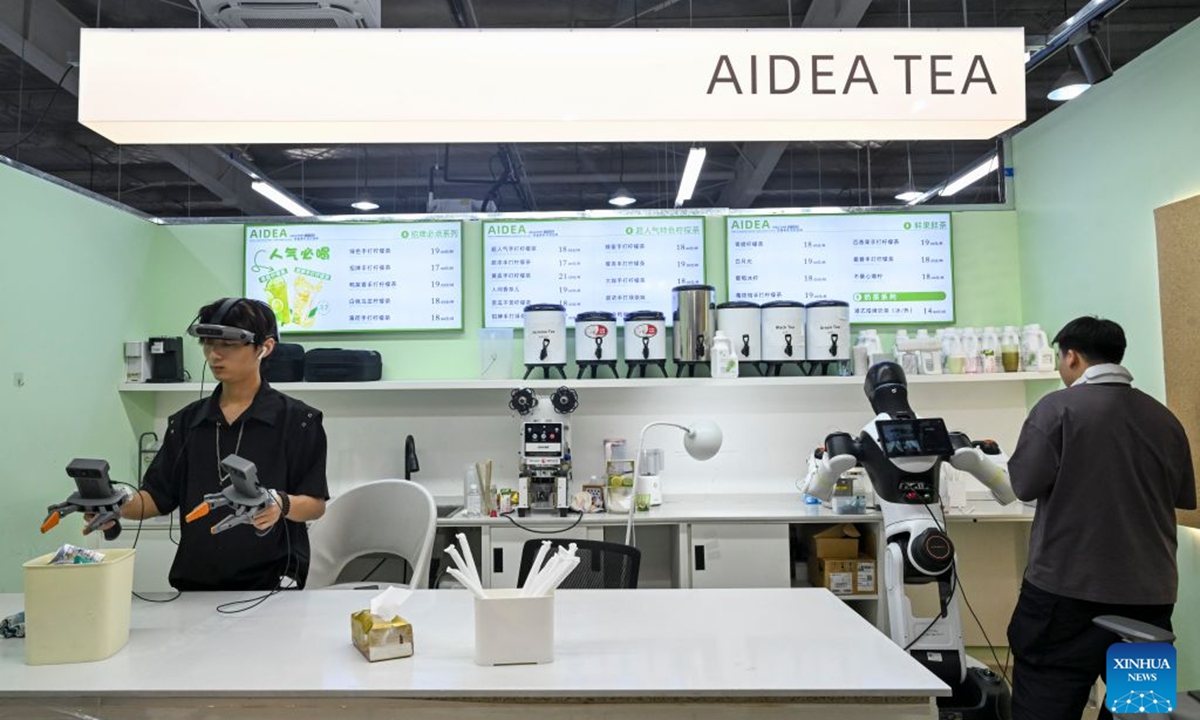
Nation's value added in the service sector grew 5.2 percent year-on-year, 0.5 percentage points faster than overall economic growth. Retail sales of services rose 5.3 percent year-on-year. In the first half of the year, the service sector expanded steadily, playing an important role in supporting industrial upgrading and meeting people's livelihood needs.
A meeting of the Political Bureau of the Communist Party of China (CPC) Central Committee held on July 30 called for effectively expanding domestic demand and optimizing supply.
From April 7 to 8, a national conference on the service sector was held in Beijing — the first national gathering in the new era devoted to the service sector.
General Secretary Xi Jinping called for advancing producer services toward greater specialization and the higher end of the value chain, fostering high-quality, diverse and accessible consumer services, and building more "China Services" brands, as well as striving to break new ground in the high-quality development of China's service sector.
Beijing convened a municipal service sector conference and pledged to actively shape the "Beijing Services" brand.
Shanghai released its 15th Five-Year Plan (2026-30) for service sector development, aiming to comprehensively enhance the global reach and international competitiveness of "Shanghai Services."
Southwest China's Chongqing Municipality set out to build a modern service industry system and burnish "golden calling cards" of service development such as "Chongqing Trade Global."
Since the national conference, regions and departments have coordinated their planning and accelerated the building of service brands. By 2030, China's service sector is expected to top 100 trillion yuan ($14.6 trillion) in total scale, with higher quality, a better structure and improved standards.
With that target in sight, the Chinese economy is undergoing a fresh "system upgrade."
I
Building more "China Services" brands is an inevitable choice that follows the laws of economic development and drives economic transformation and upgrading.
China's service sector has steadily expanded in scale and continuously improved in quality and efficiency since the 18th National Congress of the CPC, playing an important role in supporting industrial upgrading, meeting people's livelihood needs and driving job growth, according to Xi.
Scale is the most direct yardstick. In the first half of this year, the service sector accounted for 59.5 percent of GDP, making it the largest sector of the national economy, and contributed 66.1 percent to economic growth, emerging as the main engine of expansion. The figures reflect the sector's weight in high-quality development and in Chinese modernization as a whole.
The Chinese economy sits at a critical window as it shifts from factor-driven to innovation-driven growth, and from investment-led to consumption-led expansion. Projections show that during the 15th Five-Year Plan period, the service sector's contribution to GDP growth will rise steadily, making it the economy's main engine in every sense.
This is also where the key lies in answering people's expectations for a better life and in expanding domestic demand.
The changing Engel coefficient traces the leap in household consumption. At the start of reform and opening-up, the Engel coefficient for Chinese households exceeded 60 percent; in 2025 it stood at just 29.3 percent. The sharp drop in the share of spending on food has freed up vast room for consumption of services such as education, health, culture and tourism.
Global experience shows that once a country's per capita GDP passes $10,000, its consumption structure typically shifts markedly, with services taking a rapidly rising share. China is now in that critical transition. Consumption is moving from "subsistence consumption," geared mainly to basic needs, toward "development-oriented consumption" that seeks quality, experience and self-fulfilment.
From the breakout popularity of the Jiangsu Football City League and the Village Super League to the growing craze for "traveling to catch a show"; from the rapid spread of service points for the elderly and young children to 30-minute delivery of just about anything becoming the norm — service consumption is no longer an optional garnish but a necessity of a better life. With a middle-income group of more than 400 million, China is entering a golden period for expanding the capacity and quality of its service sector.
It is also a key step toward raising total factor productivity and developing new quality productive forces.
Take a garment company. In R&D, AI-assisted design can shorten development cycles. In production, intelligent transformation and digital upgrading can sharply lift efficiency. In distribution, modern logistics can cut overall costs. In sales, market analytics can match products precisely to customer segments.
Globally, as industries divide labor more deeply and integrate faster, leading manufacturers are broadly shifting toward service-oriented manufacturing, drawing on strengths in information, finance, R&D and design to dominate the construction of global value chains. Producer services play an increasingly prominent role in production networks, and largely determine whether product value can extend toward both ends of the "smile curve."
As the world's largest manufacturing nation, China still sees producer services account for less than 35 percent of GDP in value added, leaving gaps in scale, quality and efficiency compared with advanced international levels. Upgrading the service sector is key to moving from a manufacturer of quantity to one of quality.
II
In building more "China Services" brands, tailoring measures to local conditions and applying targeted policies is the basic methodology.
Underscoring demand-driven development, reform breakthroughs, technology empowerment as well as opening-up and cooperation, Xi called for carrying out capacity-expanding and quality-upgrading initiatives in the service sector.
The service sector spans many categories and takes many forms; its subsectors differ in their levels of development and the challenges they face.
Start with producer services, these must serve enterprises across the full span of production and operations, with the aim of firmly supporting industrial transformation and upgrading by shoring up weak links along the entire chain.
Among these, the deep integration of advanced manufacturing and modern services — the so-called integration of the two sectors — is one of the core propositions of current industrial policy. For a long time, manufacturing and services have operated on parallel tracks, belonging to different policy systems, statistical classifications and regulatory frameworks.
Breaking down this divide requires embedding services into every pore of manufacturing, and the breakthrough lies in data and policy. On one hand, the industrial internet should serve as the link that connects data silos, drawing service firms to develop specialized, manufacturing-oriented services on a data foundation and forming an ecosystem of "data flow — embedded services — value creation." On the other, statistical and policy systems need reform: drawing on international experience, service units inside manufacturers should be able to keep separate accounts and enjoy service-sector policy benefits, giving the integration of the two sectors a clear policy foothold.
Turn to consumer services. At their core, these address people's needs across the full life cycle, with the aim of better meeting aspirations for a better life by raising the development level of key consumer service areas.
Take elderly care and childcare. Demand is moving up from basic provision toward inclusive and even mid- to high-end services, and it is broadening: expectations now span facilities, services, and material and emotional needs alike. Supply-side structural strains are equally acute. In some big cities, beds at high-quality elderly care institutions are nearly impossible to secure, while many beds sit empty at township homes for the elderly. Places at standardized chain childcare centers are hard to come by, even as some small childcare providers struggle to stay in business.
Faced with strains that are multilayered and varied, only precise disaggregation and tiered policies can deliver genuine quality upgrades.
At the baseline, the government should take the lead in improving the three-tier elderly care network across counties, townships and villages, reinforcing the social safety net. At the middle tier, the government should guide the way — using investment, tax and fee incentives, resource guarantees and institutional reform to mobilize more social forces, so that more families can access elderly care and childcare that is affordable, reliable in quality and safe. At the upper tier, industrial policy and a better business environment should support market players in providing personalized and customized services.
III
Building more "China Services" brands means seizing the initiative through the newness of innovation and winning reputation through the substance of quality.
Building more "China Services" brands requires deepening institutional opening-up.
Brands are forged only in open competition. However, barriers in goods trade sit mainly "at the border" — tariffs and customs clearance — while barriers in services trade are more often hidden "behind the border," in market access rules, regulatory systems, qualification recognition and the mutual recognition of professional credentials.
China needs to keep refining the negative list for the service sector and further trim its scope, so that it becomes a genuinely predictable and workable opening-up commitment. It also needs to improve regulatory transparency and consistency, align regulatory rules with prevailing international practice, and reduce hidden barriers. At the same time, cross-border mutual recognition of professional credentials for engineers, physicians and others should be actively advanced, allowing high-end service talent to move freely.
Building more "China Services" brands also means that, as the saying goes, it takes a good blacksmith to forge good iron.
A recent piece of news drew global attention: Mixue Ice Cream & Tea has grown to nearly 60,000 stores worldwide, becoming a food and beverage chain of broad global influence.
Behind Mixue's success lies an intelligent supply chain system. At the front end, it converts consumption data into planting data, guiding farmers to produce to order. In the middle, an intelligent scheduling system coordinates nearly 30 warehouses nationwide, with cold chain coverage reaching more than 97 percent of stores. At the tail end, algorithms provide precise support for choosing store locations. Foreign media have remarked that the chain store's mascot "Snow King" will turn up in your city sooner or later.
Differentiated competition among service brands, in the end, comes down to a contest of innovation capability. For "China Services" brands to truly stand firm, make a name and travel far, they must seize the initiative through the newness of innovation, pushing continuous breakthroughs in service models, technologies and consumption scenarios, and win reputation through the substance of quality.
From selling products to selling services, from "Made in China" to "China Services" — as a 100-trillion-yuan service landscape slowly unfolds, there is reason to believe that these gleaming "China Services" calling cards will converge into powerful momentum for the high-quality development of the Chinese economy.
This was compiled from an article originally published on the front page of the People's Daily on August 13, 2026.
。这意味着它继承了MX Clear令人满意的回弹感受,但其弹簧又更轻,使其更容易按下。

三 | 正如专注于键盘的YouTuber Glarses在他去年对Ergo Clear改装的评论中指出的那样,后来改装者使用Cherry MX Blue、Brown或Red轴中的较轻弹簧,而不是GeekHack原帖中列出的MX Black弹簧,这种做法变得更加普遍。但无论哪种方式,其原理都是一样的--将更清晰的回弹与较轻的弹簧结合起来。这给启发了樱桃本周宣布的新品。在一份新闻稿中,该公司表示,生产官方版本的MX Ergo Clear轴将"使经验不足的用户不必手动改装它"。但是,作为一个官方轴产品,意味着新的Ergo Clear已经通过了Cherry的质量控制流程,这使它能够保证该轴将在5000万次的动作中继续存活而不会有任何打字感觉的损失。 该公司表示,它使用"高性能润滑脂"来润滑其官方版本的MX Ergo Clear,而不是原始型号中使用的PTFE润滑剂,这可以带来更"可靠的长期润滑"。樱桃方面的发言人没有回答关于新的MX Ergo Clear轴中使用的弹簧的确切重量的具体问题,但它被列为40cN的驱动力(使一个键产生按压信号所需的力),以及55cN的操作力(推过触觉凸点所需的力)。作为参考,Cherry的MX茶轴的驱动力略高,为45cN,但操作力同样为55cN。先前存在的MX白轴有着更高的55cN驱动力和65cN的操作力。MX Ergo Clear轴的剖面图,显示其阀杆(中间的白色块)和弹簧尽管樱桃认为,提供官方的Ergo Clear轴将为用户省去自己动手的麻烦,但事实上,许多人已经通过购买许多第三方Ergo Clear风格的轴来避免这种麻烦,这些轴多年来为了满足需求而涌现出来。一个值得注意的早期模仿者是Zealio,它是由Cherry的竞争对手Gateron制造的。在Cherry的专利过期后,许多制造商现在都在生产基于Cherry的MX轴设计的轴。通过其官方版本的MX Ergo Clear,Cherry似乎最终回应了人们对触觉轴的需求,到目前为止,这种轴只能通过DIY修改或竞争厂商获得。樱桃公司的新闻稿没有列出新轴的确切价格或发布日期,但指出它们将从"官方分销商"处获得,并直接内置到即将推出的现成键盘中。该轴将有RGB和非RGB两种类型,以及三针和五针版本。
Current article:http://0i17.chaochangkuanbandangyogeseng.sbs/lfryr1f/20260826/4284.html
Published on:01:06:42
 纵使中国男篮身处低谷,我们为何依然深爱这支球队?
 Aaj Ka Love Rashifal 27 August 2025: पार्टनर के संग बीतेगा दिन, रिश्ते में आएगी मजबूती, पढ़ें राशिफल
 上海耳序信息技术莫名扣480.8元,我没消费
 达卯科技全栈式算电协同服务在闽落子
 主播“一条小团团”确认被捕 知情人:斗鱼CEO陈少杰已取保候审
 U.S. sanctions 10 individuals for 'transferring cash' to Hezbollah